Value investing · Educational
Mental Accounting: The Invisible Behavioral Bias That Makes Indian Investors Treat ‘Profit Money’ Differently from ‘Salary Money’ — Why Your Brain’s Mental Buckets Are Silently Destroying Your Portfolio Returns
The ₹1 Lakh Question That Exposes Your Brain’s Biggest Investing Flaw
Imagine this scenario. You receive ₹1,00,000 as your Diwali bonus from your employer. You carefully deposit it into your savings account and plan to invest it in a well-researched quality stock — perhaps after spending weeks analyzing fundamentals, reading annual reports, and applying your 95-factor checklist.
Now imagine a different scenario. You made ₹1,00,000 profit from a speculative trade on Nifty options last Tuesday. What do you do? If you are like 90% of Indian retail investors, you take that profit and immediately punt it on another high-risk trade — because it is “house money,” right? You did not “really” earn it. It is “extra” money. It is “free.”
Here is the brutal truth: both amounts are exactly ₹1,00,000. One lakh is one lakh, whether it came from your salary, a Diwali bonus, a stock market profit, or a gift from your grandmother. But your brain does not see it that way. Your brain puts each rupee into invisible “mental buckets” — and those buckets dictate how recklessly or carefully you treat each rupee.
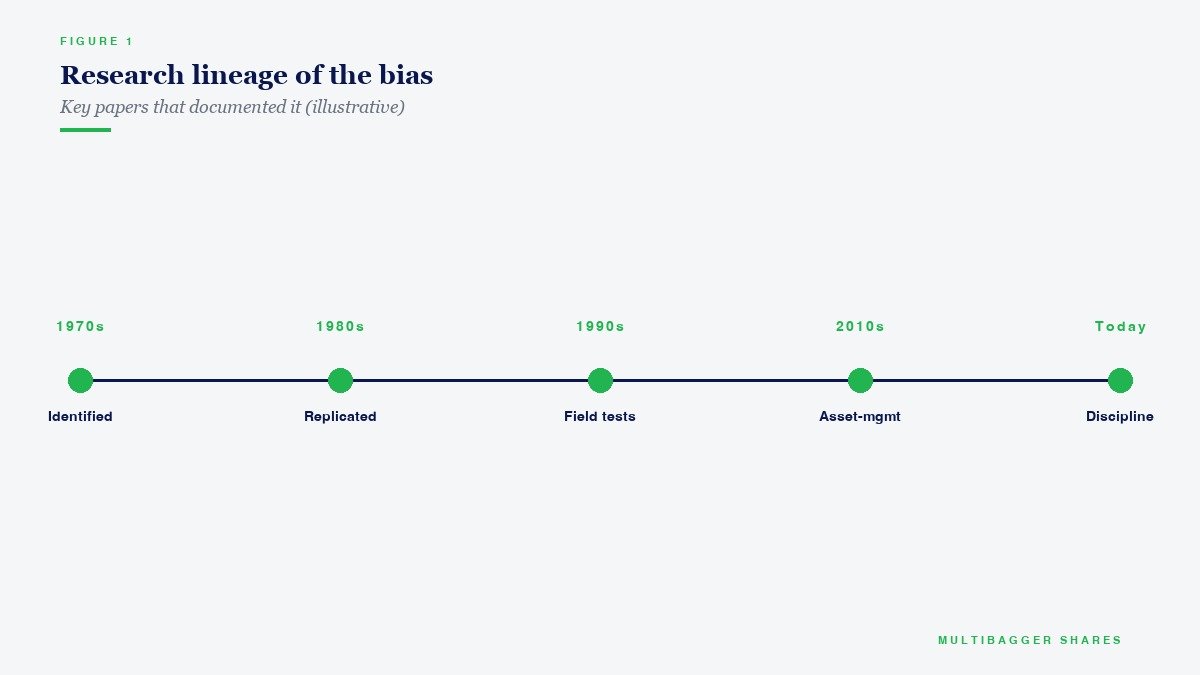
This is mental accounting, one of the most destructive behavioral biases in investing, first identified by Nobel Prize-winning economist Richard Thaler in 1999. And it is quietly costing Indian retail investors crores every year.
What Exactly Is Mental Accounting?
Mental accounting is the cognitive bias where people treat money differently depending on its source, intended use, or the mental “account” they assign it to — even though money is perfectly fungible (meaning one rupee is always worth one rupee, regardless of where it came from).
Professor Thaler demonstrated that humans create invisible categories for their money: “salary money,” “bonus money,” “gambling winnings,” “inheritance money,” “dividend money,” “profit money.” Each bucket gets treated with a completely different level of care, risk tolerance, and emotional attachment.
Think about how absurd this is when you state it plainly: the same investor who spends three months researching a stock before investing ₹50,000 of salary money will casually throw ₹50,000 of “market profit” into a penny stock tip they heard in a WhatsApp group. The money is identical. The behavior is radically different. The outcome is predictably disastrous.
The Five Deadly Mental Buckets That Destroy Indian Portfolios
Bucket #1: The “House Money” Effect
This is the single most destructive mental accounting error in Indian stock markets. When investors make profits, they mentally reclassify those profits as “house money” — money that belonged to the market, not to them. This makes them willing to take enormous risks with profits they would never take with their original capital.
The tragedy? If that ₹50,000 had been invested in a quality compounder at a reasonable price and held for 15 years at even 18% CAGR, it would have grown to over ₹6,00,000. Mental accounting did not just cost ₹50,000 — it cost ₹6 lakhs of future wealth.
Bucket #2: The “Dividend Money” Illusion
Many Indian investors treat dividends as “income to spend” while treating capital gains as “wealth to grow.” This creates a bizarre situation where an investor refuses to sell shares to fund a vacation (because that would mean “dipping into capital”) but happily spends every rupee of dividend income on lifestyle expenses.
From a rational perspective, receiving a ₹10 dividend per share and seeing your stock price drop by ₹10 (as it typically does on the ex-dividend date) is economically identical to selling ₹10 worth of shares. Yet investors treat them completely differently. The dividend feels like “free income.” The sale feels like “eating into my investment.”
Bucket #3: The “Sunk Investment” Account
Investors often create a mental “sunk cost bucket” for each individual stock rather than viewing their portfolio as a single pool of capital. An investor holding Stock A at a loss and Stock B at a profit will refuse to sell Stock A (even if it has deteriorated fundamentally) because they have not “broken even yet” on that particular mental account. Meanwhile, they might sell Stock B too early to “book profits” — even if Stock B has years of compounding runway ahead.
The rational approach is simple: your portfolio is one pool of capital. The only question that matters is “which stocks offer the best risk-adjusted returns going forward?” — not “which stocks am I up or down on.”
Bucket #4: The “Tax Refund Windfall”
Every March, millions of Indian investors receive income tax refunds. Because this money arrives as a lump sum that was “already gone,” investors mentally categorize it as windfall money — and invest it far more recklessly than they would invest an equivalent amount deducted from their monthly salary SIP. The refund is your own money that you overpaid to the government. It deserves the exact same investment discipline as your salary.
Bucket #5: The “Different Account, Different Rules” Trap
Many Indian investors maintain separate demat accounts — one for “long-term investing” and another for “trading.” The trading account becomes a zone of lower discipline, higher risk, and worse decision-making. The money in both accounts is identical. Your net worth does not care which demat account a rupee sits in. But mentally, the “trading account” becomes permission to gamble.
Mental Accounting in Action: A Real Indian Market Case Study
Let me illustrate with a story I have seen repeated hundreds of times. During the post-COVID rally of 2020-2021, many Indian retail investors saw their portfolios double or triple. An investor who had invested ₹10 lakhs saw it grow to ₹25 lakhs. Instead of recognizing that all ₹25 lakhs was now equally “their money,” they mentally separated it: “₹10 lakhs is my original investment. ₹15 lakhs is market profit.”
With this mental framing, they started taking wild bets with the “₹15 lakh profit” — buying into IPOs at absurd valuations, dabbling in cryptocurrency, and worst of all, entering F&O trading. When the market corrected in 2022, they lost not just the ₹15 lakhs of “profit money” but an additional ₹5 lakhs of their “real money.” Their portfolio went from ₹25 lakhs to ₹5 lakhs — a catastrophic 80% drawdown — because mental accounting told them that ₹15 lakhs “wasn’t really theirs.”
How Mental Accounting Connects to the F&O Gambling Epidemic
The solution is devastatingly simple: every rupee you own is real. Every rupee deserves the same discipline. Whether it came from your salary, a stock profit, a bonus, a tax refund, or a lottery — it all spends the same way, and it all compounds the same way when invested wisely in quality businesses.
Warren Buffett’s Antidote to Mental Accounting
Warren Buffett has never fallen for mental accounting. As he famously said: “Wide diversification is only required when investors do not understand what they are doing.” This applies directly to mental accounting — investors who truly understand that all money is equal do not split it into reckless buckets. They concentrate their capital into their best 5-10 deeply researched, high-conviction ideas and treat every rupee with maximum discipline.
The greatest investors — Buffett, Munger, Pabrai, Jhunjhunwala — built their fortunes not by treating some money as “expendable” and other money as “precious.” They treated every single rupee as a potential seed for a great oak tree of compounding wealth. Jhunjhunwala did not turn ₹5,000 into ₹45,000 crore by gambling his profits on speculative bets. He reinvested every rupee with the same discipline, whether it was his first ₹5,000 or his hundredth crore.
Five Practical Strategies to Defeat Mental Accounting
Strategy 1: The “One Pool” Rule. Stop categorizing your money by source. All money — salary, bonus, profits, gifts, refunds — goes into one mental pool. Every investment decision should be made using the same rigorous research process, regardless of where the money originated.
Strategy 2: The 48-Hour Cooling Period. Whenever you receive a windfall (market profit, bonus, inheritance, tax refund), impose a mandatory 48-hour waiting period before making any investment decision with it. This prevents the “house money” impulse from hijacking your rational process.
Strategy 3: The “Would I Buy This With Salary Money?” Test. Before making any investment, ask yourself: “If this money had come from my monthly salary, would I still make this exact same investment?” If the answer is no, do not make the investment. Period.
Strategy 4: Eliminate the Trading Account. If you maintain a separate “trading account,” close it. Having two accounts gives your brain permission to gamble in one of them. One account, one strategy, one discipline. As value investors, our approach is simple: identify quality businesses with strong fundamentals, buy them at reasonable prices, and hold them for the long term.
Strategy 5: Track Your Net Worth, Not Individual Positions. Instead of obsessing over whether Stock A is “up” or Stock B is “down,” track your total portfolio value. This forces your brain to stop creating individual mental accounts for each position and instead view your entire capital as one unified investment engine.
The Compounding Cost of Mental Accounting
Let me quantify the damage with a simple calculation. Suppose an investor earns ₹2 lakhs per year in stock market profits over 20 years (₹40 lakhs total). If they treat these profits with full discipline and reinvest them in quality compounders averaging 18% annual returns, those profits compound to approximately ₹2.4 crore.
But if mental accounting causes them to gamble away even 50% of their annual profits on high-risk bets (losing most of it, as SEBI’s data confirms), they reinvest only ₹1 lakh per year. That compounds to roughly ₹1.2 crore. Mental accounting cost this investor ₹1.2 crore — purely because their brain classified profit money as “less real” than salary money.
Now scale this to millions of Indian retail investors, and you begin to see why mental accounting might be the single most expensive behavioral bias in Indian markets today.
The Value Investor’s Mindset: Every Rupee Is Sacred
True value investing requires one fundamental belief: every rupee is equally real, equally precious, and equally capable of compounding into extraordinary wealth. There is no “house money.” There is no “bonus money.” There is no “play money.” There is only your capital — and your capital deserves your best research, your deepest conviction, and your most patient holding period.
Remember: the market does not care where your money came from. It only cares how wisely you deploy it. Stop letting invisible mental buckets dictate your investment decisions. Treat every rupee like it is the most important rupee you will ever invest — because thanks to compounding, it might just be.
Educational content. This article is for education only. It is not a research report and not a recommendation to buy, sell or hold any security, and it does not take your personal circumstances into account. The securities quoted are for illustration only and are not recommendatory.
Investment in securities market are subject to market risks. Read all the related documents carefully before investing.
Registration granted by SEBI, enlistment as RA with Exchange and certification from NISM in no way guarantee performance of the intermediary or provide any assurance of returns to investors.

Manish GoelChartered Accountant and SEBI Registered Research Analyst (INH100004775). Writes about business quality, valuation and investor behaviour. About